
Gasoline Hybrid vs. Diesel on a Forest Harvester
Read case study
January 9, 2026


.avif)
26 Nov 2025
5 min read

Jaguar Land Rover (JLR) set out to define the next generation of high-speed electric drive units (EDUs) for future 4WD SUVs. The challenge was to meet ambitious performance, weight, and sustainability targets while exploring a wide design space. Physically prototyping every architecture would have been slow, costly, and risky, so JLR required a virtual method to evaluate options early in the V-model process and de-risk key system decisions.
Determine the optimum high-speed motor and transmission architecture that delivers required vehicle performance with minimum mass and embedded CO₂, supporting JLR’s goal of a 20% reduction in life-cycle emissions compared with internal benchmark EDUs.
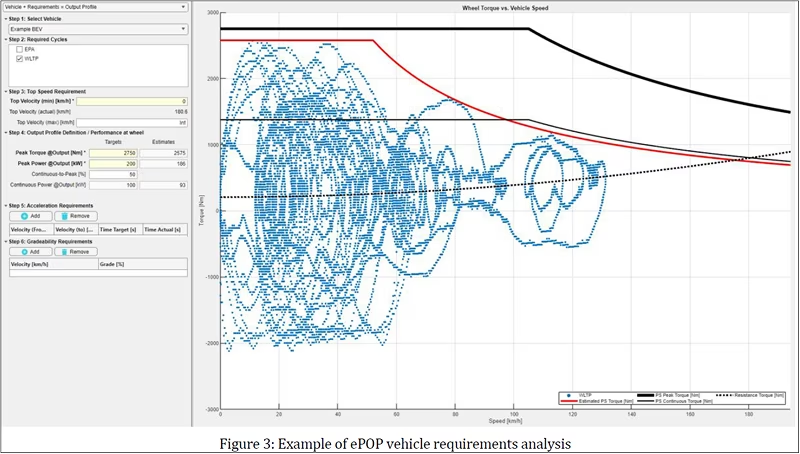
Vehicle-level targets were imported into ePOP to generate motor torque and gear ratio requirements.
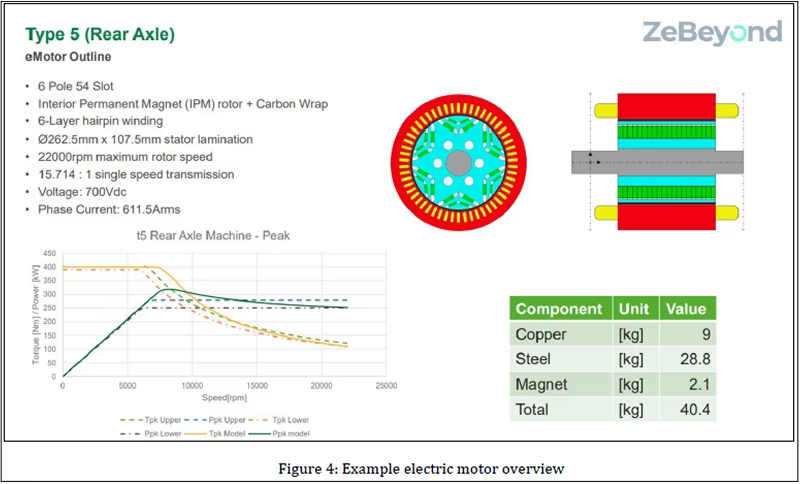
ZeBeyond with Drive System Design then created multiple high-speed MotorCAD concepts (18,000-35,000 rpm), which were imported into ePOP and paired with appropriate inverter configurations.
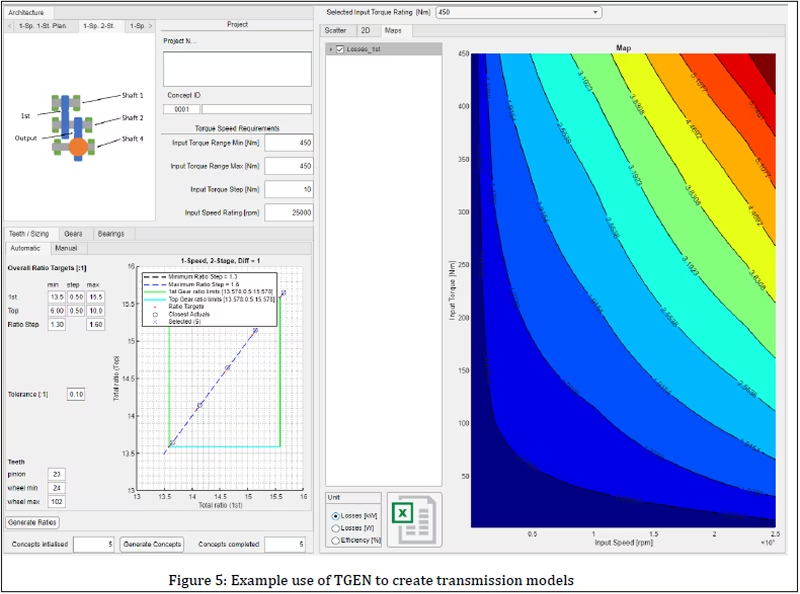
ePOP’s TGEN module was used to generate matching transmission concepts. Sustainability impacts were quantified using a custom LCA materials library built through ePOP’s ecoinvent™ integration.
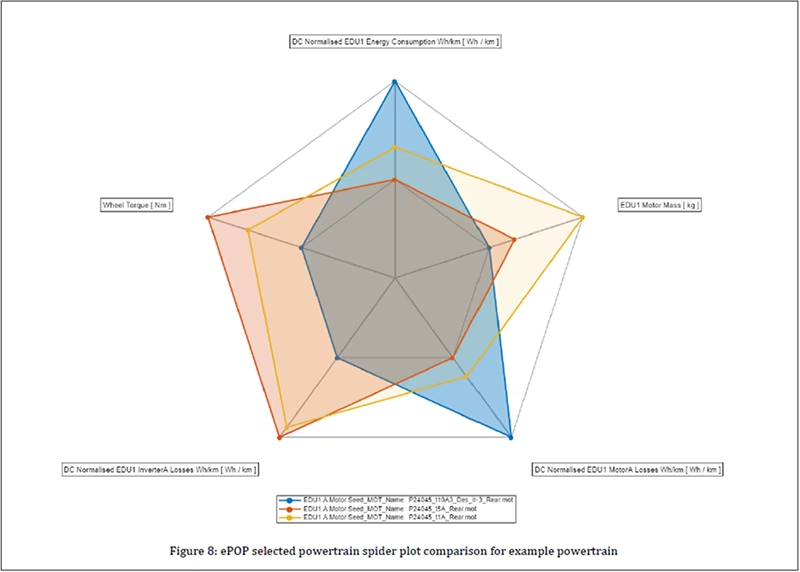
ePOP simulations identified an optimal motor-speed region that balanced efficiency and mass. Very high-speed concepts that required three-stage transmissions were shown to introduce more mass and loss than the motor downsizing could offset and were therefore deprioritised.
Life-cycle assessment confirmed that shortlisted EDU concepts achieved JLR’s target of approximately 20% reduction in embedded CO₂eq relative to internal benchmarks. Candidates on the mass-vs-efficiency Pareto front were selected for subsystem specification and detailed design.
By providing early, system-level clarity, ePOP enabled JLR to progress to the next phase of EDU development with higher confidence, reduced engineering risk, and clear alignment to performance and sustainability goals.
{{result}}
Reduction in embedded CO₂eq vs internal benchmark EDUs
High-speed electric machine design space explored virtually
of EDU design variants screened before committing to prototypes