

Gasoline Hybrid vs. Diesel on a Forest Harvester
Read case study
January 9, 2026


.avif)
05 Jan 2026
5 min read

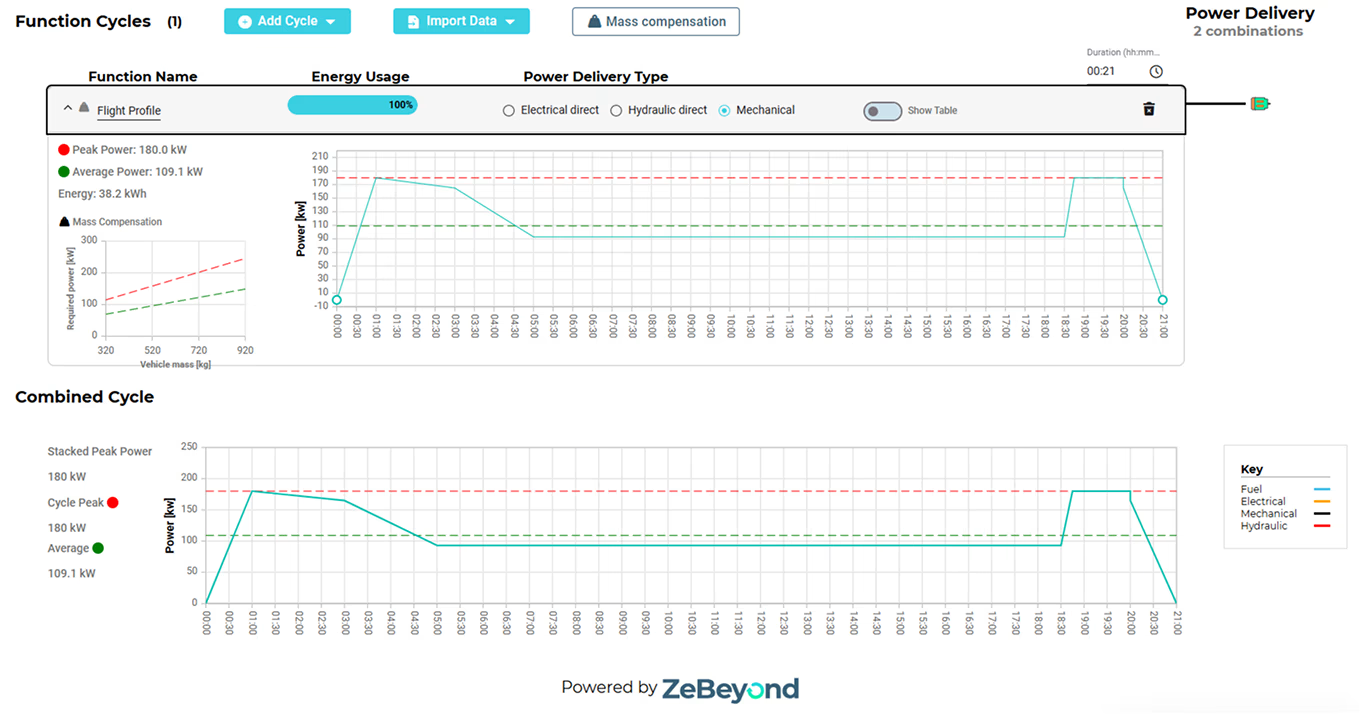
A 600 kg battery powered eVTOL has a 21-minute flight duration. The manufacturer would like to decrease the total cost of ownership for the vehicle by utilizing H2 fuel cells.
Optimize the power system and investigate KPI change when different power delivery is utilized. Investigate how introduction of H2 fuel cells will change the existing metrics for cost and mass.
Flight mission profile uploaded, maximum possible flight duration has been explored. Benchmark a battery-only powertrain required to achieve the extended power cycle. In an A vs. B powertrain comparison, change the powertrain configuration to hybrid utilizing the H2 fuel cells for power delivery.
Implementation of a parallel non-plug-in hybrid powertrain utilizing H2 fuel cells has proven to be cost effective solution which improved initial and total cost of ownership KPI’s. Duration of power delivery has been increased. Total mass of such powertrain has increased significantly due to necessity for hydrogen fuel tanks and batteries.
A cycle representing the full mission cycle for a medium size EVTOL including vertical take off and landing has been modelled.
A to B comparison between a BEV solution and a proposed hybrid powertrain based on H2 fuel cells is implemented in the model.

Powertrain initial cost breakdown of each component within the system.